

Hamas Faces Its Moment of Truth

By – Mohsen Arishi
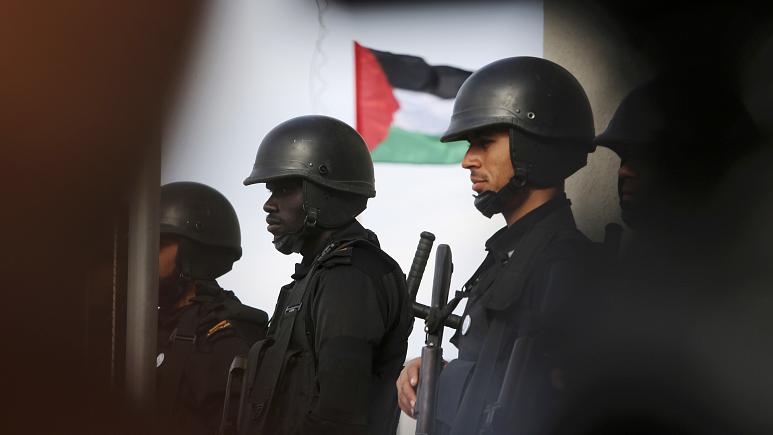
As the United States, Israel and Lebanon move closer to solidifying the ceasefire through efforts to disarm Hezbollah, Egypt is pursuing a similar approach on the Palestinian front. Cairo has brought together Hamas leaders and other Palestinian factions to discuss the second phase of the U.S. plan for Gaza—a stage widely seen as the most difficult because it focuses not simply on ending the war, but on Hamas’ future role, both politically and militarily.
Egypt’s approach is driven by a desire to preserve what remains before the situation deteriorates beyond repair. Egyptian officials believe that a prolonged war threatens not only Gaza’s people and infrastructure but could also create new realities on the ground—territorial and demographic changes that may become impossible to reverse. From Cairo’s perspective, securing a political settlement now, even at the cost of difficult compromises by Hamas, would be far less costly than risking the loss of Gaza itself amid growing Israeli calls for expanded military control.
Egyptian policymakers view the current moment as a narrow window to prevent more dangerous outcomes. With Israeli threats to widen military operations and assert control over large parts of the Strip, the future of Hamas’ weapons and the question of who governs Gaza have become central to any postwar arrangement.
In what amounts to a blunt message, Cairo has reportedly made clear to Hamas that the old equation no longer holds. Egyptian officials argue that maintaining an armed wing failed to shield either Gaza or its population during the war that followed the October 7 attack, and that new realities now require a different approach.
Under this logic, voluntary disarmament and Hamas’ withdrawal from governing the Strip could remove one of the main justifications used by Israeli Prime Minister Benjamin Netanyahu to continue military operations and push ahead with new facts on the ground.
The challenge of the second phase extends far beyond ceasefire arrangements or prisoner exchanges. What is ultimately at stake is the shape of Gaza’s future political order. Hamas sees its weapons as inseparable from its political and military identity, while Israel insists that any arrangement leaving the movement with a security or governing role would fall short of the war’s objectives.
For Egypt, the stakes go beyond the success of the negotiations themselves. Cairo views a prolonged conflict, the mass displacement of Palestinians, or a long-term Israeli reoccupation of Gaza as direct threats to Egyptian national security. That is why Egyptian leaders appear convinced that the painful concessions Hamas may be asked to make today are preferable to the far more difficult choices that could be imposed by future military developments.
More broadly, the developments in both Lebanon and Gaza point to a wider regional shift. Across the Middle East, pressure is mounting to either integrate non-state armed groups into new political frameworks or reduce their military role altogether. If those efforts succeed, the region could be moving toward a new order in which states reclaim a monopoly on the use of force and regional priorities shift from perpetual conflict toward stability and economic development.
Ultimately, the message Egypt appears to be sending Hamas is straightforward: holding on to weapons after the war could cost Gaza its future, while giving them up may offer the best chance of saving it.