

Mohamed Ghazal: The Current War Is Not Only Military, but a Strategic Struggle Over the Future of the Middle East | Interview

By: Ali Khalil
In moments of major geopolitical shifts, wars are not merely exchanges of military strikes; they become battles over the shape of the world to come. What the Middle East is witnessing today—an unprecedented escalation between Iran on one side and the United States and Israel on the other—appears to be a strategic confrontation that could reshape the region’s balance of power for years to come.
The missiles being launched and the strikes being carried out are only the visible surface of a deeper conflict revolving around influence, deterrence, and the future of regional power dynamics, at a time when military calculations intersect with political strategies and international alliances.
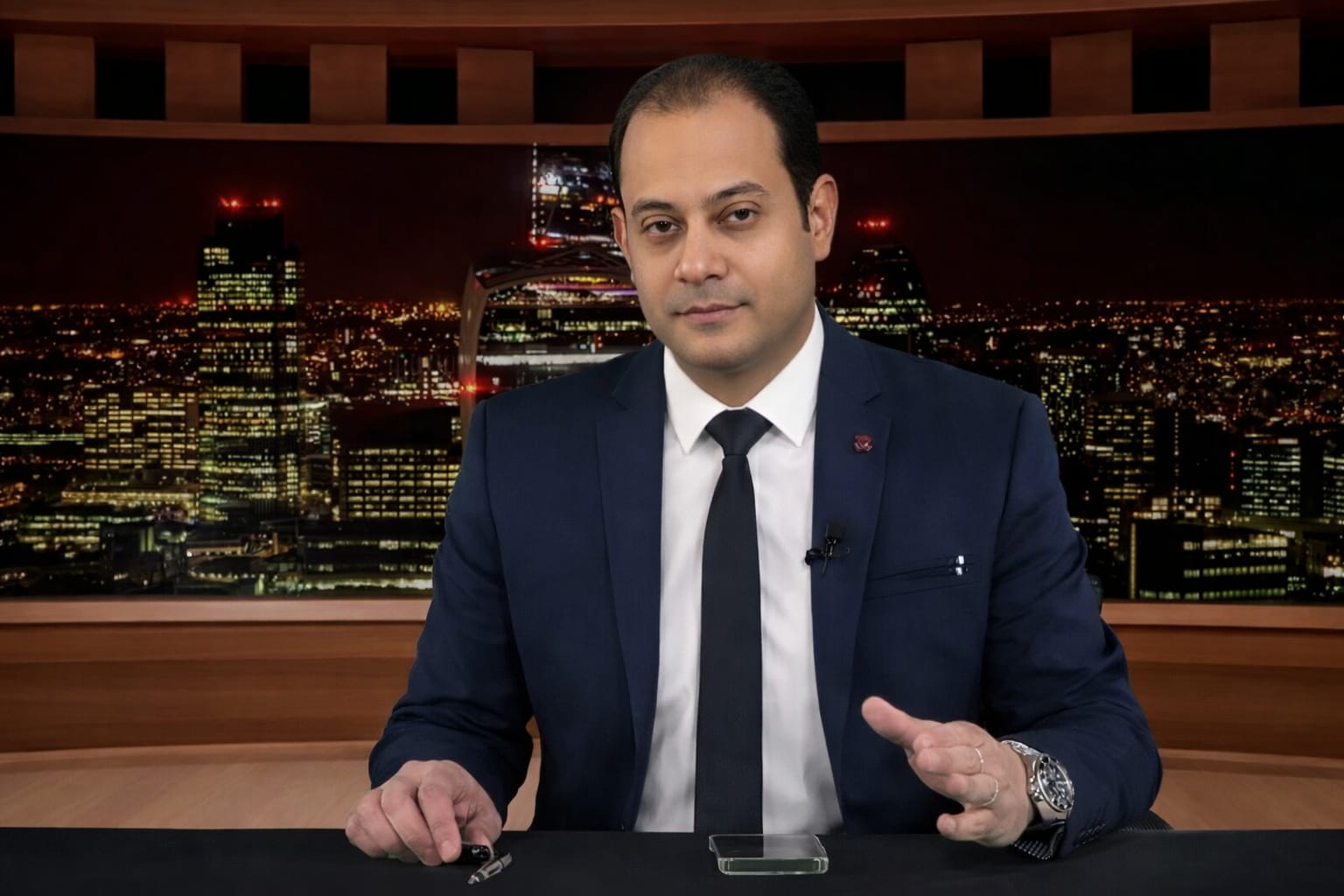
In this context, we conducted this interview with political thinker Mohamed Ghazal, head of the Egypt 2000 Party, who provided an in-depth analytical reading of the current conflict, its strategic dimensions, and the possible trajectories it may take in the coming period.
To begin with, how do you interpret the nature of the current conflict between Iran on one side and the United States and Israel on the other?
– In my view, what is happening in the region today goes far beyond the idea of a conventional military confrontation or limited tactical strikes. We are facing a broad strategic struggle over the future balance of power in the Middle East in the coming years.
The exchange of military strikes is only part of a wider picture involving attempts to reshape the region’s security and political landscape. Therefore, understanding this conflict requires viewing it as a multidimensional confrontation that includes military, political, and strategic dimensions—not merely scattered military operations.
What is the significance of the recent military strikes targeting Iranian territory?
– The nature of the targets struck inside Iran clearly indicates that the issue is not limited to disrupting Iran’s nuclear program.
The strikes have targeted military headquarters, ammunition and weapons factories, facilities linked to missile and rocket production, as well as weapons depots and logistical sites connected to Iran’s defensive infrastructure. This suggests that the real objective is to broadly reduce Iran’s military capabilities.
In other words, there appears to be an attempt to weaken Iran’s ability to sustain a long-term conflict and to reduce its deterrence capacity in the region—one of the main objectives of any strategy seeking to reshape the regional balance of power.
Some observers believe there is ambiguity in the American objectives in this confrontation. Do you agree?
– Yes. A careful reading of political discourse in the United States in recent months reveals a degree of inconsistency in the declared objectives.
At times the focus is on destroying Iran’s nuclear program; at other times there is rhetoric supporting internal protests in Iran or discussing the possibility of regime change, while another narrative focuses on limiting Iran’s missile capabilities.
This variation reflects a certain lack of clarity in the American strategic vision, which may have important consequences for the trajectory of the conflict. It could prolong the confrontation and transform it into a long war of attrition rather than resolving it quickly.
What about Israel’s strategic calculations in this war?
– In my assessment, the strategic calculations in Israel appear clearer.
Israel has long sought to reduce Iranian influence in the region, whether by targeting Iran’s direct military capabilities or by limiting its regional reach.
The ultimate goal is to weaken Iran to the point where it becomes a state with limited influence in Middle Eastern equations. If this objective is achieved, it would naturally reshape the region’s security balance in a way that strengthens Israel and its allies within the regional system.
On the other hand, how capable is Iran of withstanding these pressures?
– Iran possesses a unique political and security structure. Since its establishment, the Iranian system has been based on a doctrine often referred to as the “resistance doctrine,” which centers on enduring external pressure and transforming conflicts into long-term struggles that exhaust adversaries.
Moreover, the Iranian political system is characterized by multiple institutions and distributed centers of decision-making among political, religious, and military bodies, giving the state a certain capacity to manage crises even under difficult circumstances.
These factors may allow Iran to endure longer than some observers expect.
Could leadership dynamics inside Iran affect the future of the conflict?
– Certainly. The issue of leadership in Iran is a sensitive factor in any strategic analysis of the conflict’s future.
However, it should also be noted that the Iranian system has institutional mechanisms that allow the state to function even during major crises. These include bodies such as the National Security Council and the Assembly of Experts, in addition to the influential role of the Islamic Revolutionary Guard Corps within the country’s security and military structure.
The existence of these institutions means that the Iranian state does not rely on a single center of decision-making but rather on a broader institutional framework, which provides a degree of structural stability even in times of crisis.
You mentioned the role of the Revolutionary Guard. How do you evaluate its influence in managing the current conflict?
– The Islamic Revolutionary Guard Corps represents one of the most powerful institutions within the Iranian state.
Over the past years, it has gained extensive experience through involvement in several regional conflicts, which has enabled it to play a significant role in shaping Iran’s defense and strategic policies.
However, it is important to emphasize that the Iranian system does not operate under the absolute control of a single institution but rather through a complex balance between several political, religious, and military institutions.
Amid this escalation, is there still a chance for a political settlement?
– At present, the chances for negotiations appear limited, especially given the deep mutual mistrust between the United States and Iran, which has intensified following the recent military escalation.
However, political history shows that major conflicts often eventually end at the negotiating table, particularly when the conflicting parties conclude that continuing the war would result in strategic losses for all sides.
How could this war affect the future of Iran’s nuclear program?
– Historical experience suggests that states facing direct military pressure often reassess their defense strategies.
In some cases, such pressure may push states to further strengthen their military capabilities, and perhaps reconsider policies related to strategic deterrence programs.
Therefore, continued military pressure could ultimately produce counterproductive results by encouraging Iran to enhance its defensive capabilities even further.
Finally, how do you see the impact of this war on the future of the Middle East?
We are facing a pivotal moment in the region’s history –
The consequences of this war will not be limited to Iran, Israel, or the United States; they will affect the overall political and security balance across the Middle East.
Any shift in the balance of power among these actors will directly influence the structure of the regional system and the nature of political and military alliances in the years ahead.
For this reason, the coming period will require a great deal of wisdom in managing regional conflicts, because a slide toward broader confrontations could have serious consequences not only for the Middle East but for global security as well.