

From Jerusalem to National Interests: Is Iran Rewriting Its Regional Strateg
 By Mohsen Arishi
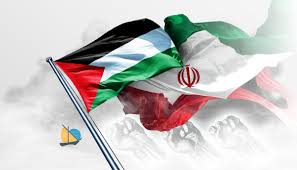
The absence of any reference to the Palestinian issue or the question of Jerusalem in the U.S.-Iran ceasefire agreement has raised numerous questions about the future of Iran’s traditional rhetoric regarding the “liberation of Jerusalem” and “support for the Palestinian resistance,” which has been one of the central pillars of Iranian foreign policy since the Islamic Revolution of 1979.
For more than four decades, Tehran portrayed itself as the spearhead of confrontation with Israel and promoted the slogan that “Jerusalem is the central cause of the Islamic nation.” It also adopted support for a number of armed movements and factions across the region under the banner of the “Axis of Resistance.”
Recent developments, however, suggest a gradual shift in Iranian national security priorities, with the Iranian leadership increasingly placing the protection of the political system, the preservation of domestic stability, and the prevention of a large-scale military confrontation with the United States and Israel at the forefront of its strategic objectives.
In this context, the U.S.-Iran ceasefire agreement contained no reference to the Palestinian issue, the future of Jerusalem, or even guarantees concerning Iran’s allied factions in the region. Some observers interpreted this as an indication that Iran may be moving from a phase of “ideological confrontation” to one of “managing national interests.”
Supporters of this interpretation argue that Tehran has effectively accepted the separation of regional conflict issues from its direct relationship with Washington and has come to regard the Palestinian issue more as an instrument of regional influence than as an independent strategic objective of Iranian foreign policy.
This development also raises fundamental questions about the future of the concept of the “Axis of Resistance” and Iran’s ability to continue leading this axis if its primary priority becomes avoiding major military confrontations and preserving its domestic and regional gains.
On the other hand, another group of analysts argues that the absence of the Palestinian issue from the agreement does not necessarily mean that Iran has abandoned it. Rather, they contend that this reflects the nature of the agreement itself as a limited security arrangement focused on de-escalation and regional security arrangements, rather than on the broader political issues related to the Arab-Israeli conflict.
Nevertheless, comparing Iran’s traditional rhetoric—which linked the legitimacy of its regional project to the liberation of Jerusalem—with current agreements and understandings that contain no commitments or even references to the issue reveals a widening gap between ideological slogans and the requirements of pragmatic statecraft.
This moment may therefore represent the beginning of a broader strategic transformation in Iranian policy, one in which Tehran shifts from a project centered on “exporting the revolution” and leading regional confrontation toward one more focused on protecting the Iranian state and advancing its direct national interests.
The question facing Arab and Islamic public opinion remains: Was Iran’s support for the Palestinian cause a fixed strategic objective, or was it, at least in part, an instrument for expanding regional influence and strengthening Iran’s position within the Middle East’s balance of power?
The answer to this question will depend on Iranian policies in the years ahead, rather than solely on what was—or was not—included in any single political agreement.