

Israel and Iran: Missile and Information Warfare since 28 February 2026

By Ali Khalil
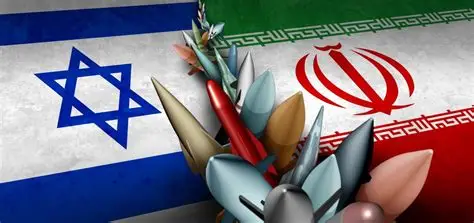
Since 28 February 2026, the Middle East has entered an unprecedented escalation between Israel and Iran, where the confrontations shifted from mere verbal threats to full-scale warfare with precision missiles and drones. The conflict has not been limited to conventional military engagements; it has involved targeting cities, critical infrastructure, and psychological and information warfare, making the assessment of casualties and military capabilities essential to understanding the region’s future.
Israel has focused on weakening Iran’s military capabilities, targeting missile depots, Revolutionary Guard facilities, and drone manufacturing plants, while Iran responded with concentrated missile waves on Israeli cities, causing civilian and material losses and significant psychological impact, despite Israel’s advanced air defenses.

1. Timeline of Israeli Strikes on Iran
| Date | Type of Attack/Location | Military and Material Outcomes |
|---|---|---|
| 28 Feb 2026 | Initial airstrikes on Tehran and surroundings | High-ranking Revolutionary Guard officers killed, arms depots destroyed, partial neutralization of missile stockpiles |
| 1–5 Mar 2026 | Revolutionary Guard bases and missile depots | Use of drones and precision missiles, limited military injuries, disruption of supply lines |
| 9–12 Mar 2026 | Isfahan, Qom, and Natanz nuclear facility | Disruption of missile production labs, targeting air defense installations, reduced Iranian counter-strike capabilities |
| 16–18 Mar 2026 | Tehran and Natanz | Destruction of air defense batteries and missile depots, limiting Iran’s drone and missile operations |
| 21–24 Mar 2026 | Revolutionary Guard centers and missile factories | Disruption of military production, depletion of defensive capabilities, long-range strategic deterrence achieved |
| 25 Mar 2026 | Targeted strikes on energy and defense facilities | Extensive destruction of depots, suspension of some military production lines, enhanced Israeli strategic leverage |
Summary: Israel concentrated on neutralizing Iran’s military capabilities while minimizing civilian casualties, employing precise, sustainable offensive strategies.
2. Israeli Losses
| Category | Details |
|---|---|
| Civilian deaths | Approximately 18, mainly in Beit Shemesh and Greater Tel Aviv |
| Injuries | Around 4,713, ranging from minor to severe |
| Material damage | About 9,000 buildings and 3,000 vehicles damaged or destroyed; partial damage to electricity and communications infrastructure |
| Air defense | High interceptor missile consumption, high operational cost, but highly effective in reducing casualties |
| Psychological impact | Temporary displacement, school and business closures, stress on civilians and military personnel |
3. Iranian Losses
| Category | Details |
|---|---|
| Deaths | Over 1,500 civilians and military personnel, including senior Revolutionary Guard officers and intelligence officials |
| Injuries | Thousands of civilian and military injuries from airstrikes and missile attacks |
| Material damage | Extensive destruction of energy facilities (oil refineries, power stations, gas plants), missile depots, and drone manufacturing facilities |
| Military capabilities | 70–75% of Iranian military targets destroyed, reduced production of missiles and drones |
| Social impact | Large-scale internal displacement, disruption of electricity, water, and communications in multiple regions |
4. Conflict Analysis
- Israel’s strategy: Focused strikes on Iran’s military capabilities to limit missile counterattacks while minimizing civilian casualties.
- Iran’s strategy: Missile counterattacks on Israeli cities to demonstrate deterrent capabilities and exert political pressure, despite diminished military capabilities.
- Psychological and informational warfare: Both sides use media, rumors, and information operations as part of their strategy, making the conflict extend beyond land and sky into the cognitive domain.
5. General Conclusion
- The current conflict is a blend of airstrikes, precision missiles, drone attacks, and psychological impact on civilians.
- Israel has successfully weakened Iran’s military capabilities, while Iran has demonstrated its ability to inflict human and material losses on Israel despite advanced air defenses.
- The region is in a critical phase of strategic tension, where each military operation affects the regional and political balance of power.
Suggested Headlines
- Israel and Iran: Missile and Information Warfare since 28 February 2026
- Losses and Strategies: The Israeli–Iranian Conflict in the Mirror of Events and Deterrence