

Gaza’s vanishing middle class: from professional careers to street surviva
By Mohsen Arisshi
The war in the Gaza Strip is no longer defined only by the scale of destruction or the rising death toll. Beyond the bombed buildings and shattered neighborhoods, another crisis is unfolding quietly but devastatingly: the collapse of Gaza’s social and economic backbone.
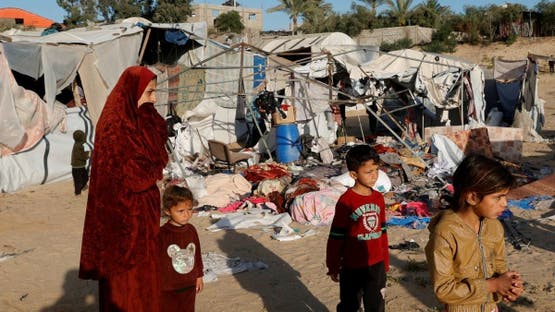
As institutions crumble, businesses disappear, and clinics, offices, and markets are reduced to rubble, thousands of professionals who once formed Gaza’s middle class are now struggling simply to survive. Business owners, doctors, engineers, academics, and skilled workers have been pushed out of their professions and onto the streets, selling food, cigarettes, clothes, and household items just to feed their families.
The scenes unfolding across Gaza reveal the depth of an economic disaster that has fundamentally transformed daily life. For many, years of education, experience, and professional status no longer provide protection against poverty or displacement. Survival itself has become the only priority.
Before the war, Gaza’s professional sector managed to function despite years of blockade and recurring political and economic crises. Small businesses operated, private clinics served communities, engineering offices remained active, and many families relied on modest but stable incomes. That fragile system has now largely collapsed under the weight of war and widespread destruction.
Commercial centers have been destroyed, workplaces shut down, and savings wiped out within months. At the same time, banking services have been severely disrupted, salaries suspended, and access to cash increasingly limited. With few alternatives remaining, many families have been forced into what can best be described as a “survival economy,” where any form of informal trade becomes a lifeline.
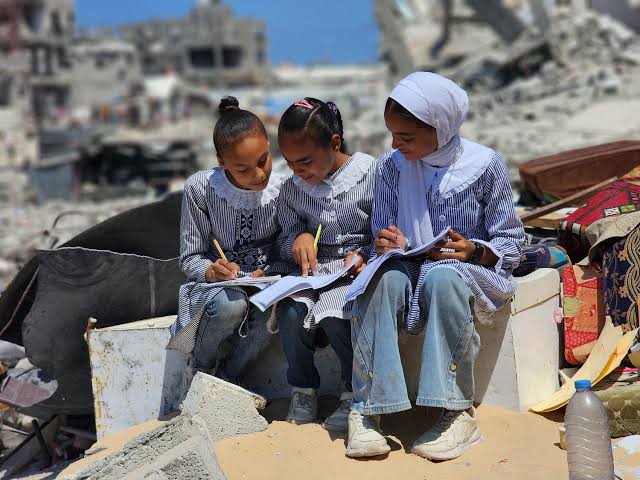
Across Gaza today, it is no longer unusual to see a doctor selling canned food on the roadside, an engineer trading second-hand clothing, or a businessman sitting on a sidewalk offering cigarettes or small household items. Professional identity has become secondary to one urgent question: how to secure enough money for a single meal.
What makes this crisis particularly alarming is that it extends far beyond rising poverty rates. Gaza’s middle class — long regarded as a pillar of social stability and economic resilience — is rapidly disappearing. The very group that once relied on education and professional expertise to build a secure future can no longer shield itself from severe deprivation.
The long-term consequences could be profound. The erosion of the middle class threatens to weaken one of the key foundations of social and political balance in Palestinian society. If these conditions persist, many highly skilled professionals may seek to emigrate or abandon their fields entirely, creating a lasting brain drain that could severely undermine future reconstruction and recovery efforts.
Gaza’s sidewalks have effectively become improvised marketplaces. Open-air stalls now display food supplies, used clothing, personal belongings, and basic household goods sold by families desperate for cash or food. While these scenes reflect Palestinians’ remarkable ability to adapt under extreme hardship, they also expose the depth of the crisis.
For many, street vending was never a choice driven by business ambition, but rather a final option to avoid hunger and total collapse. Yet this adaptation should not be mistaken for resilience without limits. Instead, it highlights how deeply the war has penetrated every layer of society, dragging even educated and professional classes into growing humanitarian distress.
Even if the fighting eventually stops, the damage inflicted on Gaza’s economic and social structure is likely to endure for years. Rebuilding roads, homes, and infrastructure may prove easier than rebuilding a shattered middle class. Restoring professionals to their former roles will require economic stability, functioning institutions, and large-scale reconstruction funding — all of which remain uncertain.
The war has reshaped Gaza’s social reality in ways few could have imagined. The distinction between businessman and laborer, doctor and street vendor, has increasingly faded. In today’s Gaza, nearly everyone is bound by the same harsh reality: the daily struggle to survive one of the worst humanitarian and economic crises in modern Palestinian history.