

.. When Tel Aviv Screams …
What About Gaza’s Cries
?????? …..

By Ali Khalil:
In a scene familiar in international politics, Israel rushed to turn to the UN Security Council, accusing Iran of using “internationally banned” weapons, foremost among them cluster munitions—one of the most controversial arms due to their indiscriminate impact on civilians. Reports detailing rockets carrying dozens of submunitions scattered across wide areas reignited an old debate: Who sets the rules of war? And who abides by them?
Yet the most urgent question was not technical or military—it was primarily ethical.
For decades, international and human rights organizations have documented the use of highly destructive, internationally prohibited weapons in Palestinian territories, especially Gaza, where high population density makes any wide-impact weapon inherently catastrophic. Reports from international human rights bodies have cited the use of large-scale bombs and munitions that leave long-lasting effects on civilians and infrastructure—yet such incidents have not always become urgent issues on the international community’s agenda.
Today, however, with the trajectory of rockets changing, the picture seems different. Cities unaccustomed to being targets are now facing scenarios that have been broadcast for years from Gaza. Here emerges a stark contradiction: when danger is distant, it is labeled politically; when it approaches, it suddenly becomes an urgent humanitarian crisis.
Numbers Too Harsh to Bear: First-Time Testing of Israel’s Banned Weapons
Beyond political and military debate, the numbers remain the harshest testimony to what is happening. According to official reports and UN sources, tens of thousands of victims fell in Gaza during recent escalations, with a significant proportion being civilians. Estimates suggest more than 10,000 children, over 7,000 women, tens of thousands of young people injured or killed, and thousands of elderly who could not survive. These figures are not merely statistics—they are complete human stories, each number representing a life ended and a family whose fate has been permanently altered.
If the death toll shocks, the number of wounded reveals an even harsher face of war. Medical and humanitarian reports indicate thousands suffering severe injuries, many of whom lost limbs due to bombings and explosions. This reflects destruction that does not end at the moment of impact but extends for years in the lives of victims. Many will live with permanent disabilities in a health system under immense pressure and severely limited resources, making daily survival and recovery a constant challenge.
Amid this scene, a question as painful as the numbers arises: Who is held accountable? With operations continuing amid clear international silence or incapacity, doubts grow about the effectiveness of international laws and their ability to protect civilians or punish those responsible for violations. The most painful truth is that justice often does not arrive as quickly as the rockets do.
And the question follows: If Iran is to be punished for using internationally banned weapons against Israelis, who will punish Israel?
International Law in Question: Netanyahu’s ICC Case
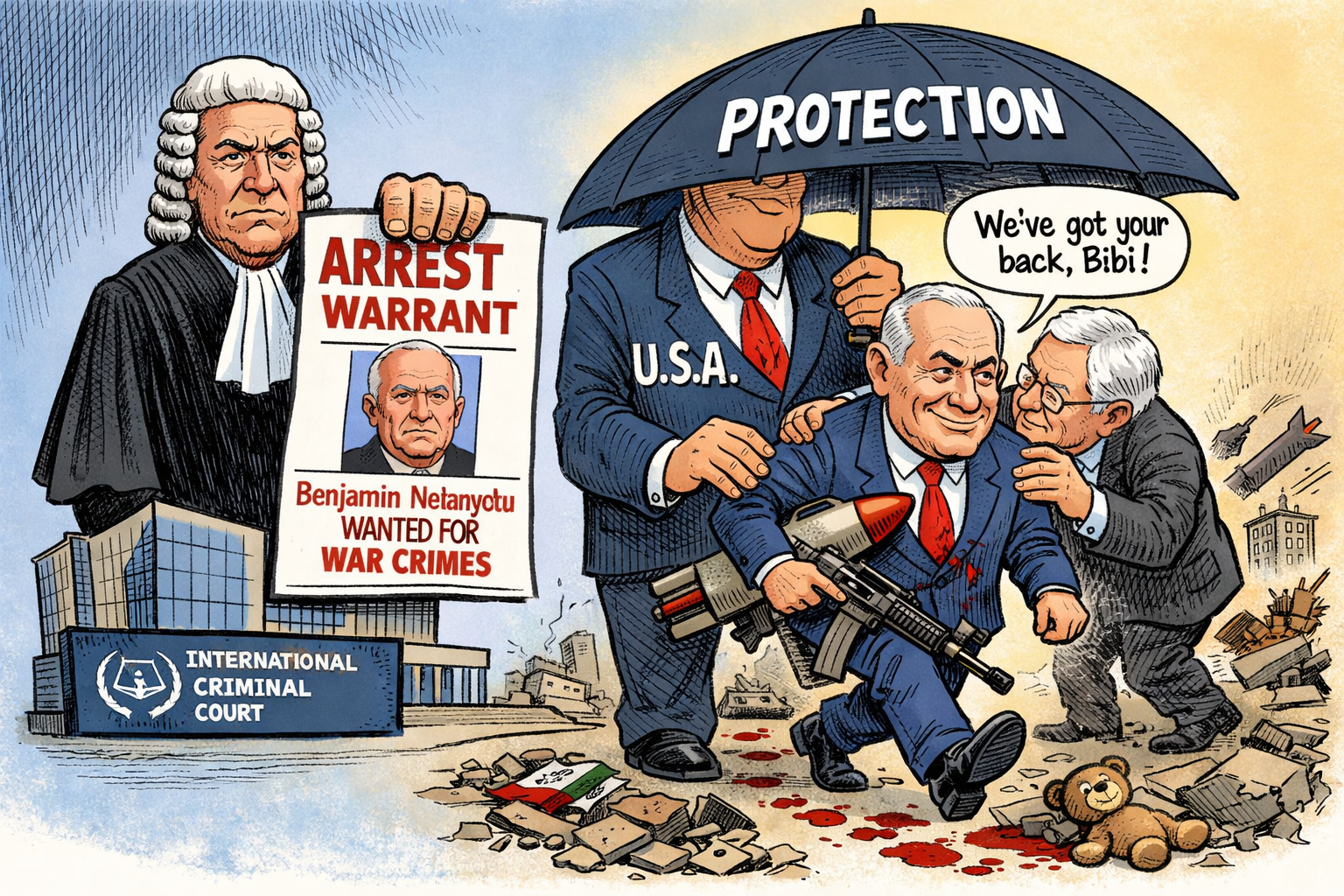
In this context, one of the most controversial points emerges: the issuance of an arrest warrant for Benjamin Netanyahu by the International Criminal Court on charges of war crimes. Despite the seriousness of this measure—intended as a step toward international justice—the reality tells a different story. The decision has yet to be enforced, and Netanyahu continues to operate politically and diplomatically, expanding the use of banned weapons in Lebanon without clear restrictions.
This scenario raises deep questions about the effectiveness of the international legal system and its ability to enforce rulings equally on all parties. If international justice decisions are not implemented, do they become merely political tools? And does international law lose credibility when it applies selectively?
At such moments, the language of “banned weapons” is not present in international discourse with the same force, nor does it become an urgent issue on the Security Council agenda with comparable intensity.
Today, with the change in rocket trajectories, the picture is different. Israeli cities, unaccustomed to being targets, are now facing scenarios that have been broadcast for years from Gaza.
Here emerges the stark contradiction:
When the danger is distant, it is political.
When it approaches, it suddenly becomes an urgent humanitarian crisis.
No one denies the danger of indiscriminate weapons, nor can anyone justify their use against civilians anywhere. But true justice cannot be fragmented, and international law loses its meaning not just when selectively applied, but when it is applied at all.
What is happening today cannot be read merely as a military escalation; it is a mirror reflecting a deeper flaw in the international system, where suffering is measured by double standards and some voices are heard louder than others.
Yet the most painful truth remains: justice, in many cases, does not arrive as quickly as the rockets.
Between Politics and Faith: Reading the Scene
In the Arab street, some interpret what is happening as a form of divine justice or as a backlash from years of violence, while others see it as the direct result of a long political and military escalation led by figures like Benjamin Netanyahu, under U.S. cover led by Donald Trump, in a complex conflict mixing security and political calculations.
But beyond any interpretation, the most important truth remains:
Civilians are always the ones paying the price.
Ultimately, the question remains open:
Are we witnessing a moment that could redefine the rules of engagement and international justice?
Or is this merely a new chapter in the same story, where the players change but the rules remain the same?