

“Al-Tayibat” Doctrine: A Polarising Legacy in Contemporary Medicine
By : Mohsen Arishi
The name of Egyptian physician Diaa El-Awadi, a professor at Ain Shams University Faculty of Medicine, has become deeply intertwined with controversy across Egypt and the broader Arab world following his promotion of an unconventional approach to treating chronic illnesses.
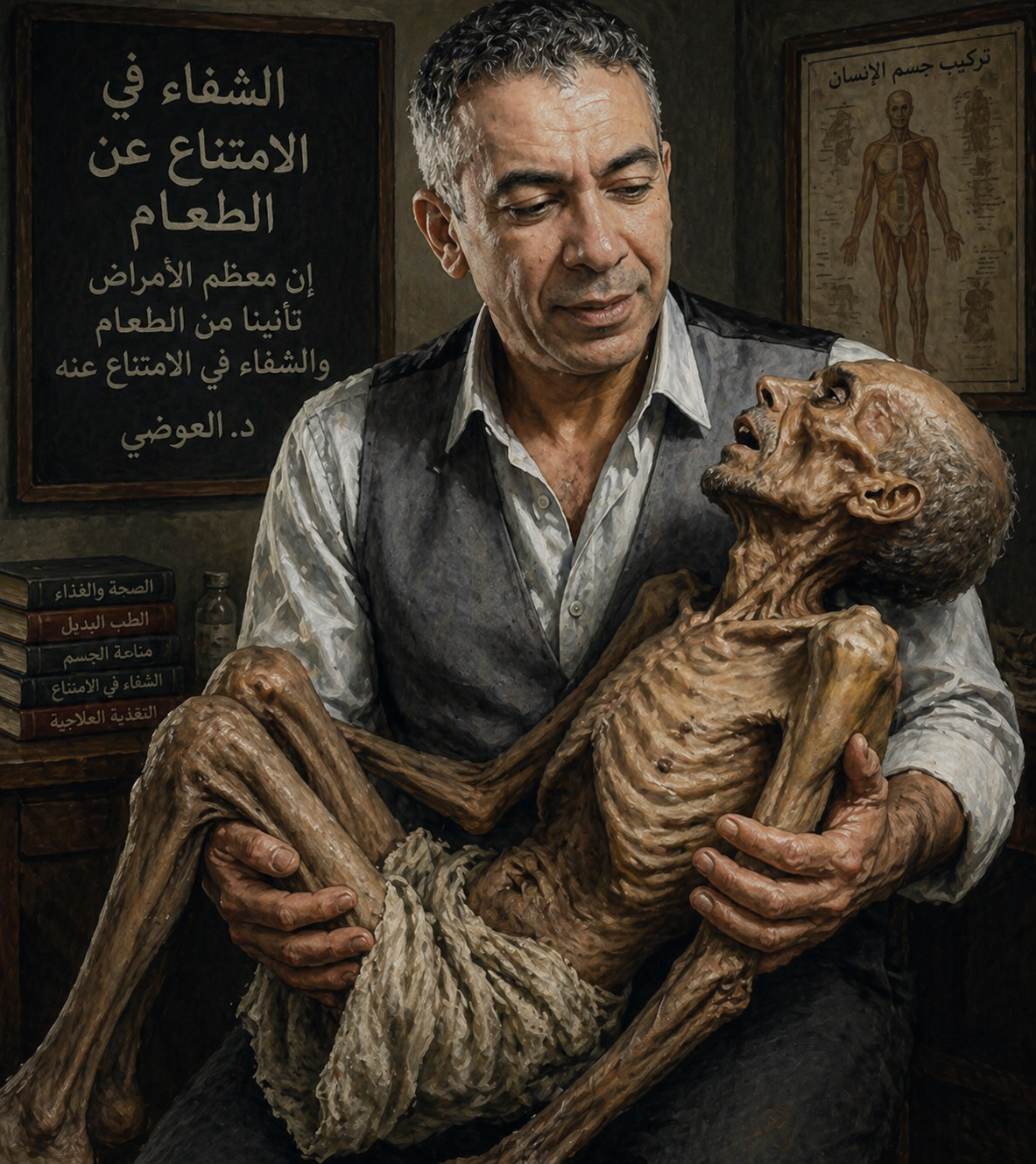
Propelled into the public spotlight through frequent television appearances and an expansive social media presence, El-Awadi urged patients—particularly those suffering from diabetes, hypertension, and kidney disease—to fundamentally rethink their dietary habits. At the heart of his philosophy lay the conviction that “food can be both poison and cure,” a notion that became the cornerstone of what he branded as the “Al-Tayibat” (“Wholesome Foods”) doctrine. Under this framework, he advocated the restriction—or complete elimination—of specific food groups, arguing that strict dietary discipline could restore health and ultimately make medications and recurring medical consultations redundant.
In a striking twist of fate, El-Awadi died in Dubai, United Arab Emirates, on April 19—or possibly two days earlier. His sudden death immediately reignited public debate surrounding his ideas and sparked intense speculation across social media platforms.
Although his lawyer described the death as natural, and an official statement issued by the Egyptian Ministry of Foreign Affairs and Emigration attributed it to sudden cardiac arrest with no indication of foul play, rumours spread like wildfire online, with competing narratives attempting to connect his death to the controversy that had long surrounded him.
El-Awadi’s public image was shaped by a series of highly contentious medical positions that many physicians considered beyond the pale of evidence-based practice. Among his most criticised claims were warnings against consuming poultry, eggs, dairy products, and even certain vegetables. Yet the argument that truly set the cat among the pigeons was his recommendation that diabetic patients consume sugar as part of treatment, coupled with calls for patients—including those with type 1 diabetes—to discontinue insulin therapy altogether. That position triggered fierce backlash from healthcare professionals, many of whom warned that such advice could place lives at serious risk.
The controversy eventually reached a boiling point when the Egyptian Medical Syndicate revoked his membership, accusing him of disseminating medically unsound information unsupported by scientific evidence and promoting unverified treatments that could jeopardise public health. The syndicate’s disciplinary committee described his conduct as a grave breach of both professional ethics and medical standards.
Far from fading after his death, the debate surrounding El-Awadi has only gathered steam. Online communities and advocacy pages with substantial followings in Egypt and abroad continue to circulate his lectures and defend his methodology, portraying him as a maverick physician who dared to challenge entrenched interests within the healthcare industry. Supporters argue that pharmaceutical companies, diagnostic laboratories, and segments of the medical establishment have a vested interest in keeping patients tethered to conventional treatment models.
Backers of his approach further contend that El-Awadi adapted elements of the “rice diet,” originally developed by German-American physician Walter Kempner, incorporating them into his broader “Al-Tayibat” philosophy.
Critics, however, maintain that extraordinary claims require extraordinary evidence. Many medical professionals insist that El-Awadi’s theories cannot be validated through anecdotal success stories or isolated patient experiences, but must instead be subjected to rigorous, peer-reviewed scientific scrutiny conducted by credible research institutions. Among those voices is Mahmoud Hegazy, an oncology professor based in Australia, who has called for systematic scientific evaluation of El-Awadi’s claims while remaining open to examining certain aspects of his work more closely.
Ultimately, the “Al-Tayibat” doctrine occupies a deeply contested space at the intersection of alternative medicine and evidence-based clinical practice. To supporters—including a limited number of physicians—it represents a bold reimagining of the relationship between nutrition and chronic disease. To critics, however, it is a medically unsubstantiated framework that risks giving vulnerable patients false hope while steering them away from scientifically validated treatment.
As the controversy continues to divide public and professional opinion alike, one reality remains clear: the debate over El-Awadi’s legacy underscores the urgent need for robust scientific inquiry capable of separating promising nutritional hypotheses from potentially dangerous medical speculation.