

‘The Field Marshall Plan’

Investment Prospects in Egypt Following El Sisi’s Appointment as New President of Egypt
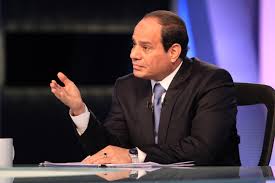
Former military leader Abdel Fattah El Sisi took the oath of president on Sunday 8 June; El Sisi won the election with a landslide 96.91 percent of the vote. Leftist politician Hamdeen Sabahi was the only candidate to stand against Sisi in the presidential race. The Egyptian stock market immediately rallied by 4.7 percent on Sunday. Investors are hopeful that the inauguration of a new president with a military background signifies the path towards stability and predictability that they are craving for.
Earlier this month the Ministry of Finance announced a 10 percent annual tax on net realized portfolio profits and cash dividends – the Egyptian Exchange said the plan was amended to exempt cash dividends below 15,000 Egyptian pounds ($2,098). Profits from the Stock Market are currently tax free. The move is defended by the International Monitory Fund (IMF). IMF Mission Chief for Egypt calls the new measure “well targeted and fair, solving Egypt’s budget problems requires tax increases as well as subsidy cuts. Taxing high income earners, including by taxing gains from capital, can make an important contribution and benefit all Egyptians.” Despite this, Egypt’s EGX 30 is up over 75 percent over the last year. The index rallied by an impressive 137 percent since its low point at the end of 2011.
As the stock market rebounds, Sisi has a steep hill to climb to ensure a return of foreign investment into Egypt. A month or two prior to the presidential elections, many experts I spoke with suggested an initial return of primarily Arab investment in the period between the presidential and parliamentary elections. Recent developments suggest these estimates are accurate. The King of Saudi Arabia is particularly vocal about his country’s support of Egypt’s recovery. King Abdullah suggests an aid conference to pledge financial support for Egypt, a call backed by the UAE. The so-called GCC-3 – Saudi Arabia, Kuwait and the UAE – already provided economic support valued at $12 billion. Mohamed Abu Basha, an economist at EFG Hermes, rightly points out that Egypt requires more than fuel supplies and aid money; it urgently needs investment to create jobs which needs more and more international partners. UAE based developer recently signed a $40 billion agreement to build low income housing in Egypt, the government put in another $ 5 billion to construct wheat silos to reduce wastage in grain crops.
So what do we know about Sisi’s plans for the development of Egypt? Prior to the elections it was mostly rhetoric – understandable if a landslide victory is likely and you do not need or wish to expose yourself to potential criticism – but even after the election Sisi remains vague. Some say he will task an elected government with formulating a plan for economic recovery; this means that potential investors will need to wait until the end of the year (parliamentary elections are scheduled for October) to receive concrete information on potential development projects.
A week prior to the elections Sisi was asked about his vision for the future of Egypt in two consecutive TV interviews. This is where he mentions a ‘Marshall Plan for Egypt’; some now jokingly refer to it as the ‘Field Marshall plan’. The initial Marshall Plan was an American initiative to aid European economies after the end of WWII. While it is encouraging that Sisi wishes to create a blueprint of a plan for Egypt – something that could greatly benefit the investment climate and ensure that aid money is not spent haphazardly -he should take into account that the conditions that made the initial Marshall plan a success are not necessarily found in Egypt. Trying to deliver such a plan is likely to have some undesirable effects.
After WWII the international community made maximum effort early on to mobilise large financial resources to countries like Poland to help it get its policy right. Security is the most prominent difference; development after WWII only occurred after hostilities completely ceased and a high level of domestic security was established. Post-Mubarak Egypt furthermore is still skeptical of the role of the West, by some their involvement is seen as an infringement on sovereignty. Another issue is that the Marshall Plan was a plan for reconstruction, not re-invention. Many see Egypt as one of the more modern and progressive countries in the Middle East, but its level of development cannot be compared to say Germany or Japan pre-WWII. In many ways Egypt is re-establishing its identity after the ouster of Mubarak, and redefining the role of certain institutions and assets, not just rebuilding.
Finally, the success of a long term development plan hinges on having a transparent leadership in place with full checks and balances. We have to remember that the revolution in Egypt was not just political but profoundly economic. Corruption played a large part in bringing about Egypt’s revolution in 2011; this has to be eradicated to ensure that aid and investment money goes to the right channels and supports the long term plans as laid out in the blueprint.
As I mentioned earlier, in the coming months it is likely we will see Egypt stabilise further, increased Arab investment will help support Egypt’s economy and gradually bring market confidence back. If security is safeguarded, tourism should pick up a little. Western investment will take longer to return, not least as a result of challenges in securing funding for projects via international banks. Most insurance companies still categorize Egypt as a high risk investment destination which makes it difficult for banks to approve finance for investment.
However, Western leaders welcome the appointment of Egypt’s new president. Washington stated on Wednesday it looks forward to working with Egypt’s president-elect Abdel-Fattah El-Sisi, urging his government to ensure freedoms and enact democratic reforms. The US administration was pleased that international monitors were allowed to observe the vote, added the statement, noting that observers found the vote was administered “professionally and in line with Egyptian laws”. As AFP reported President Barack Obama, currently travelling in Europe, plans to speak to El-Sisi in the coming days.
British Foreign Secretary William Hague said in an official statement issued on Tuesday that Britain is looking ‘to President-elect Sisi to take steps to implement the rights contained in Egypt’s constitution. He stated that Britain is looking forward to working with El-Sisi’s government on strengthening the “broad and productive relationship between both our peoples.” Britain’s top diplomat argued that the best way for Egyptians to achieve the goals of the 25 January revolution is through an inclusive political process in which all groups can participate.
The UK was one of the first countries to issue a statement indicating a wish to work closely with the new president by boosting trade and investment between the two countries. The Egyptian-British Chamber of Commerce as well as the British government determined that a prominent UK business delegation to Egypt from 12 to 15 October is timely. After all, a new permanent president, increased stability, an imminent new government with full decision-making powers, and a new roadmap for economic recovery should make Egypt a very attractive prospective for UK investors by the end of this year.
By Karin van Wesep
Business Development Manager
The Egyptian-British Chamber of Commerce