

Analysis: Syria Attack Raises Fresh Questions Over U.S. Military Presence
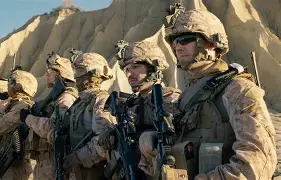
WASHINGTON / DAMASCUS – Arab Telegraph – The killing of two U.S. soldiers and a civilian interpreter during a meeting with local leaders in the Syrian city of Palmyra underscores the persistent security risks facing American forces operating in the country, even as Washington maintains that ISIS has been territorially defeated.
The attack, which U.S. officials said was carried out by an ISIS-affiliated individual acting alone, highlights the fragile nature of local partnerships that underpin the U.S. military mission in Syria. While American forces rely heavily on coordination with local actors to conduct counterterrorism operations, the incident illustrates how insider threats and infiltration remain difficult to fully prevent.
U.S. officials have also acknowledged a potential involvement of “partner forces,” a statement likely to intensify scrutiny over vetting procedures, intelligence-sharing mechanisms, and force protection protocols. Analysts say such incidents tend to revive internal debates in Washington over the sustainability and scope of the U.S. deployment in Syria, where roughly 900 American troops remain stationed.
The presence of U.S. forces in Syria is officially justified as part of an international campaign to prevent an ISIS resurgence and to support local partners. However, repeated attacks — including those involving coordinated or insider elements — raise questions about whether the current footprint can effectively balance operational goals with acceptable risk levels.
Regionally, the incident may further complicate an already crowded security environment, where U.S. troops operate alongside — and at times in proximity to — Russian, Iranian-backed, and Syrian government forces. Any perception of weakened security or wavering commitment could be exploited by rival actors seeking to expand their influence in central and eastern Syria.
For Washington, the attack is unlikely to trigger an immediate withdrawal, but it reinforces the delicate calculus surrounding its Syria strategy: maintaining pressure on extremist groups while limiting exposure in a conflict zone that remains politically unresolved and operationally volatile.
As investigations continue, U.S. policymakers face renewed pressure to reassess force protection measures and clarify long-term objectives — particularly as domestic attention increasingly shifts toward higher-priority global theaters.