

Art D’Égypte Celebrates Centuries of Decorative Art with the Inauguration of ‘Formed by Dialogue’ at the Egyptian Museum
By Ahmed Fawzy
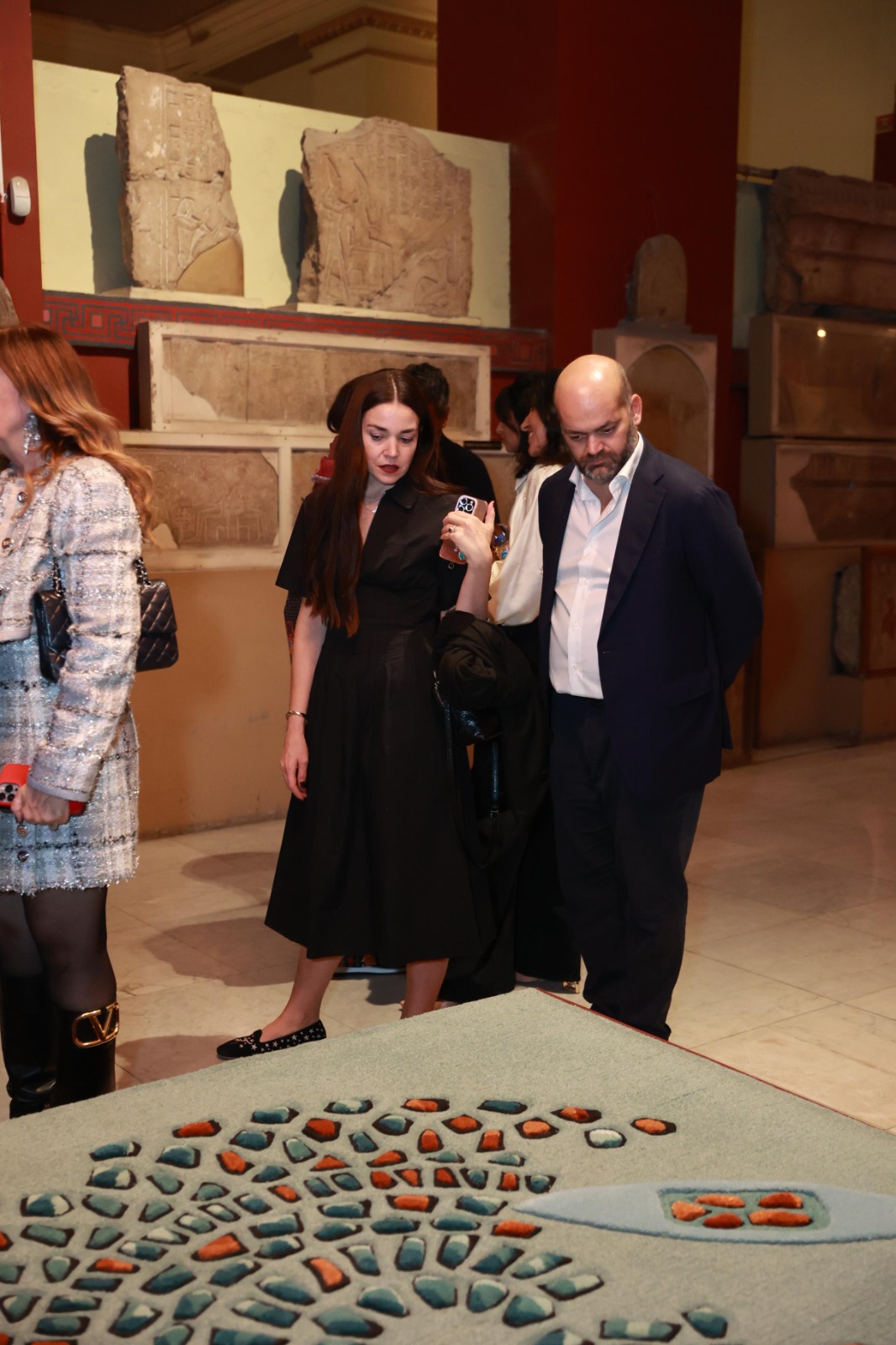
Art D’Égypte opened ‘Formed by Dialogue’ at the Egyptian Museum in Cairo. this landmark exhibition honours the museum’s legacy, established in 1902, and marks a century of Art Décoratifs by showcasing a dynamic interplay between heritage and contemporary innovation.
The exhibition showcases 18 works by international artists and designers across sculpture, furniture, textiles, and jewellery, reflecting a dialogue between past and present while honouring craftsmanship and innovation.
Participating artists and designers include India Mahdavi, Charlotte Colbert, Fernanda Alvarez, Omar Chakil, Kahhal 1871 in collaboration with Mohamed Banawy, Cotta Designs by Ahmad El Sherif, Nagada, Nado’s, Don Tanani, Athan Mytilinaios, Meherunnisa Asad with Studio Lél, Jean-Marie Appriou, Rochelle Nembhard, Ebb & Flow Studios, Benjamin Uyeda, R’KAN Edition, Giulia Tubelli, Iram Jewelry in collaboration with Marie Khouri, and Enlighten—a renowned lighting design studio that transformed the Egyptian Museum into a space where light itself becomes a storyteller.
Enlighten, responsible for the lighting of every piece in the Formed by Dialogue exhibition, introduced a compelling concept titled Awakening the Ka. Through a thoughtful interplay of radiance and shadow, the studio highlights both ancient artefacts and contemporary works. Each piece is illuminated to “awaken the Ka,” guiding the viewer’s gaze and forging a connection between history and modern creativity—ultimately creating a luminous dialogue between past and present.
Alongside the exhibition, a unique showcase was curated for VIP guests by Don Tanani. The NAKHL Collection celebrates the palm as a symbol of life, resilience, and abundance. Visitors journey through modular groves inspired by the traditional palm chair, reimagined through contemporary interventions. Eight designers—Buro Doqi, Lina Al Orabi, Design Point, Nagada, Rebel Cairo, Threads of Hope, Yasmine El Melegy, Nora Aly, and Farah Abdelhamid—reinterpret the palm’s materiality and cultural heritage. Don Tanani’s Nakhl Sofa and Nakhl Chair pay tribute to the artisans preserving this craft, merging tradition with modern design to spark a dialogue between past and future.
“As civilizations have risen and fallen, art, design, and craftsmanship have formed a universal language, shaping our shared human heritage,” says Nadine Abdel Ghaffar, founder of Art D’Égypte by CulturVator. “‘Formed by Dialogue’ is a celebration of these reciprocal exchanges, a recognition that innovation springs from the meeting of techniques, aesthetics, and philosophies across cultures. Here, we honour the essence of Decoratives Art—a testament to the enduring power of creativity to transcend time and connect us through beauty, meaning, and our shared humanity.”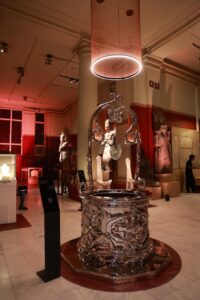
In the spirit of the 1925 International Exhibition of Modern Decorative and Industrial Arts, Formed by Dialogue honours the enduring power of craftsmanship and material ingenuity across the Middle East, Africa, and the world. Bringing together global designers and artists, the exhibition explores design as both a vessel of identity and a space for cultural exchange, celebrating tradition while envisioning new futures shaped by collaboration and dialogue.
This exhibition would not have been possible without the support of our incredible sponsors. A special thank you to LMD Real Estate, our main sponsor. We are also grateful to Mansour Group, Nado’s, Enlighten, Don Tanani, our event partner Brandaid, our official beverage partner Al Ahram Beverages Company and our venue partner Venture Lifestyle.
Our appreciation extends to our financial partner Ulter by Valu; our exhibition partner 9inenty and our catering partner Chef’s Kiss. Thank you as well to Kahall 1871, our insurance partner Barta & Partners and Scib Paints.
Exhibition highlights and artist statements:
● Mohamed Banawy, an Egyptian artist and PhD in art philosophy from Helwan University, exhibits his piece “Finding the Gold” with Kahhal 1871, Egypt’s oldest luxury rug maker. His award-winning mosaic art explores human rights, while Kahhal’s hand-crafted rugs fuse heritage and modern design, creating a dialogue between tradition and contemporary creativity.
● Cotta Designs by Ahmed El Sherif presents The DUALITY Chair. Inspired by the timeless motifs of ancient Egyptian design, the chair reinterprets heritage through a modern lens. Its sculptural form features a distinctive split backrest, evoking abstract wings or an open book, symbolising balance, openness, and harmony while combining functionality with contemporary elegance.
● Armenian-Lebanese designer Sylva Assilian presents Manteau, a weaving collection that blends tradition and innovation. Featuring a palm tree–inspired motif in green, blue, purple, and yellow, the fabrics evoke water, land, and sky, while Nagada’s loom trains new artisans, honouring her business partner Michel Pastore’s legacy.
“Exhibiting at the Egyptian Museum provides a platform to present our work in a context that embodies our ongoing pursuit of modernity within tradition and the ancient world,” said Assilian.
● Omar Chakil presents Uraeus Birth Chair, a pair of hand-sculpted Egyptian alabaster onyx chairs. Merging contemporary design with the protective symbolism of the rearing cobra, the chairs evoke fertility, protection, and transcendence, reflecting Chakil’s signature fusion of heritage and modernity.
● Lina Alorabi for Don Tanani presents RA Armoire from Don Tanani’s Duality collection. Inspired by Ra, god of the sun, the coffin-like exterior evokes darkness, while the illuminated interior symbolises renewal. The piece blends Ancient Egyptian mythology with contemporary design, embodying duality in both form and meaning.
● Athan Mytilinaios presents Influencer, the 1st, a limestone and metal sculpture reimagining Egypt’s hieroglyphic legacy. A pharaoh holds a phone in place of a staff, bridging ancient symbols and modern emojis, celebrating Egypt’s enduring mastery of communication across millennia.
Mytilinaios shared: “As a child, I dreamed of ancient gods and forgotten temples. To now present my work among these treasures is profoundly humbling. Being invited to Art Décoratif at the Egyptian Museum is not merely an exhibition — it is an expression of gratitude to the stories that shaped my imagination.”
● Meherunissa Asad X Studio Lél, Lapis Lazuli: The Wound and the Archive reinterprets ancient Egyptian ostraca and inlay traditions, using lapis, turquoise, gold, copper, and brass to trace trade routes from Badakhshan to Egypt. Through collaboration with Afghan artisans, Meherunnisa Asad transforms fragments into acts of memory, continuity, and renewal, blending heritage with a contemporary mosaic language.
“Exhibiting at the Egyptian Museum is a conversation across centuries—between the lapis of Badakhshan, my beginnings in Peshawar, and Egypt’s inlay traditions that first gave these stones their voice. As an artist navigating the intersection of decorative arts and contemporary practice, it is deeply meaningful to engage with a legacy where craftsmanship conveys profound cultural narratives,” said Asad.
● Charlotte Colbert, a multimedia artist and award-winning filmmaker, explores narrative, identity, and the unconscious through surreal and fantastical forms. Supernatural Tendencies reimagines the traditional wishing well, cast in metal to reflect its surroundings and the viewer, creating a space for personal reflection and imagined possibility.
Colbert shared: “It is a privilege to participate in the Art Décoratif exhibition within such a storied institution as the Egyptian Museum. My work, ‘Supernatural Tendencies’, is a wishing well that connects to the archetypes of Ancient Egypt, inviting a re-exploration of the familiar language of our childhood.”
● Jean-Marie Appriou, a Paris-based sculptor, blends human, animal, and vegetal forms across materials including bronze, glass, and clay. Les Barques du Nil, hand-built with ochre Nile clay in collaboration with Fayoum potters, evokes the solar barques of Ancient Egypt, transforming human figures from Nile silt into vessels of memory, breath, and continuity.
● Fernanda Alvarez, a self-taught Brazilian artist, fuses spirituality, pop art, and urban aesthetics in vibrant, emotionally charged works. Rebirth of Light brings her layered vision into dialogue with the Egyptian Museum, exploring transformation, renewal, and the luminous interplay between past and present.
“Participating in Art Décoratif at the Egyptian Museum is a distinct honour, allowing my contemporary vision to converse with a space where the past and present converge through artistic creation,” said Alvarez.
● Rochelle-Webster Nembhard, a British-Jamaican interdisciplinary artist, works across sculpture and performance to explore ecological, gendered, and ancestral narratives. Womb to Tomb, crafted in wood and Egyptian gold leaf, reimagines the tomb as a vessel of transformation, bridging past and present while celebrating the sacred continuum between the feminine, the material, and the metaphysical.
“To present ‘Womb to Tomb’ at the Egyptian Museum is to enter a dialogue of rebirth, where ancient cosmology and contemporary creation intersect. It is an honour to contribute to Art Décoratif and reimagine the feminine as the eternal source of creation and renewal,” said Nembhard
● Exhibited under EBB & FLOW STUDIO, Mariam Sabbour presents Chess & Backgammon, a versatile piece crafted from white rhino marble and alabaster. Functioning as both a chessboard and a side table, it celebrates Egyptian heritage and embodies dynamic duality, blending ancient artistry with contemporary elegance while honouring locally sourced materials.
● Artist and designer Ben Uyeda presents Stone Chair, sculpted from black Aswan granite. In an age defined by rapid progress, he turns to an ancient material to explore enduring form and evolving technology. The piece transforms solid stone into a contemplative lounge chair, bridging art, architecture, and daily life while quietly echoing Egypt’s monumental heritage.
“As someone who works with stone as a medium, there is no greater honour than having my work featured here,” said Uyeda.
● Italian architect and artist Giulia Tubelli presents Under the Same Sky, integrating wood, metal, textile, and I-mesh filament. The Bala Wala Chi armchair and Pedj-shes tapestry merge Italian and Egyptian design, transforming cultural heritage into contemporary forms. Tubelli’s work fosters a Mediterranean dialogue where architecture, myth, and imagination converge.
● R’KAN Edition, founded by Rania Fahmy and Masha Shobokshi, presents The Tale of the Eternal Palms Console. Inspired by the first sunrise of Ra, two eternal palms rise from the waters of creation, merging functionality and artistic expression. The work reflects R’KAN’s ethos of collaboration with artists and artisans, transforming objects into dynamic conduits for creativity and imagination.
● Nado’s Jewellery, established by siblings Maha, Youssef, Dina, and Mostafa El Sharafy, draws on a family legacy of craftsmanship. Pieces such as the Cardamom Caravat (2022), Termes Necklace (2022), and Lotus Strato Necklace (2025) embody biomorphism, translating patterns and forms from nature into fluid, abstract, yet precise designs. Crafted in gold, these creations pulse with life, blending heritage, artistry, and contemporary luxury.
● IRAM collaborates with sculptor and designer Marie Khouri to present Wearable Structures from the Reptilia Collection (Gold, 2025). This sculptural hand cuff reinterprets ancient Egyptian symbolism, channeling the cobra’s power as a symbol of protection and divine authority. The piece merges IRAM’s fine jewelry craftsmanship with Khouri’s fluid sculptural language, creating a contemporary statement of strength, elegance, and timeless cultural resonance that honors Egypt’s regal heritage.
● The Bishop by India Mahdavi, an architect, designer, and scenographer based in Paris, transforms stone into a sculptural meditation. Of Iranian and Egyptian heritage, Mahdavi’s work reflects a cross-cultural sensibility, blending architecture, furniture, and object design into a cohesive creative vision. The Bishop embodies her signature approach: a dialogue between material, form, and narrative, shaped by a cosmopolitan and multicultural lens that spans both space and time.