

Tourism in Egypt: A Strategic Pillar and a Gateway to Sustainable Growth
A Vital Sector for the Egyptian Economy
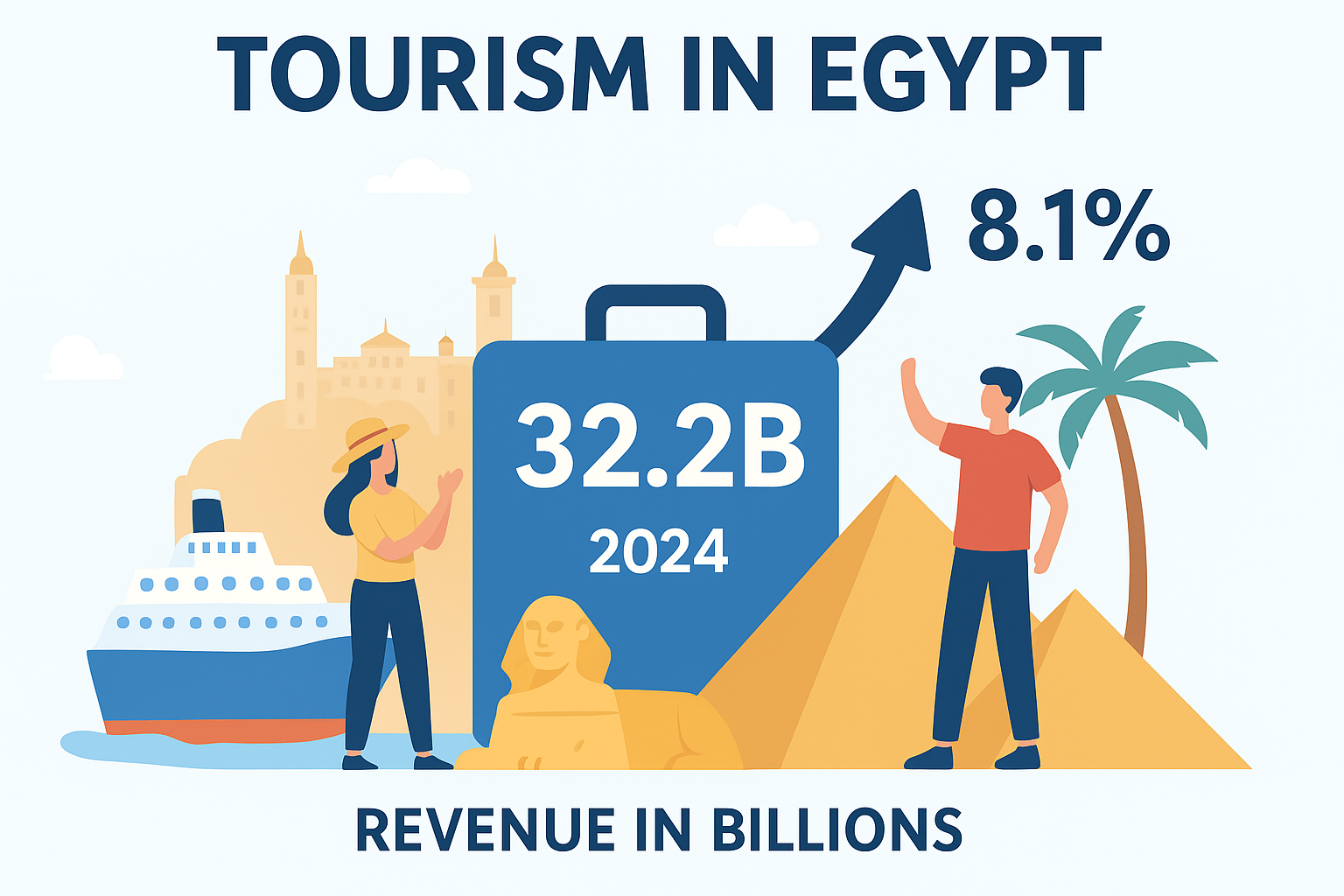
Tourism remains one of Egypt’s most important economic pillars, contributing around 8.1% of the country’s GDP and serving as a primary source of foreign currency and employment opportunities. Despite global crises and domestic challenges in recent years, the sector has begun to regain its momentum thanks to government reforms and private sector investments.
According to the UN World Tourism Organization (UNWTO), Egypt’s tourism revenues reached 32.2 billion EGP in 2024, marking a significant increase compared to previous years and reflecting steady improvements in performance indicators.
Employment and Human Capital Development
Tourism in Egypt provides direct and indirect employment to more than 2.7 million people. Its impact extends well beyond hotels and resorts, encompassing transportation, restaurants, handicrafts, and entertainment services. Every gain in tourism performance directly translates into better livelihoods, higher incomes, and broader economic participation.
Financial Flows and Revenues
In 2024, direct tourism revenues amounted to 19.9 billion EGP, while total revenues reached 32.2 billion EGP. On the expenditure side, outbound international spending by Egyptian travelers stood at 16.3 billion EGP, whereas domestic spending within the tourism sector reached 11.1 billion EGP. These figures underline tourism’s importance as a balancing factor in Egypt’s broader economic equation.
Investments and Government Support
Egypt’s hospitality capacity expanded by nearly 7,200 new hotel rooms in 2024, with 55% representing entirely new capacities. Capital investments in the sector rose to 6.0 billion EGP, reflecting growing investor confidence. At the same time, the Central Bank of Egypt launched a 50-billion-EGP initiative to support tourism projects, helping operators overcome challenges and drive expansion.
Persistent Challenges
Despite positive growth, the sector continues to face obstacles such as multiple approval layers, bureaucratic hurdles, and high fees tied to tourism projects. The government, however, is actively addressing these issues through legal and administrative reforms aimed at creating a more investor-friendly environment.
Global Growth Prospects
Worldwide, tourism is expected to continue its upward trajectory, with projections of a 15% increase in international arrivals by the end of 2024. This creates a golden opportunity for Egypt to strengthen its share of the global market by leveraging its unique geographic location, rich cultural heritage, and diverse tourism offerings—from beach resorts and cultural tours to medical and religious tourism.
Vision 2030: Attracting 30 Million Tourists
Egypt has set an ambitious target of 30 million annual tourists by 2030. Achieving this goal requires doubling investments in hotel capacity, expanding infrastructure such as airports and road networks, and enhancing tourism services. The government also emphasizes sustainable tourism practices, ensuring that Egypt’s natural and cultural assets are preserved for future generations.
Conclusion
Tourism in Egypt is more than leisure—it is a strategic sector and a national growth driver. With ongoing reforms, strong public-private cooperation, and bold investment strategies, Egypt is well-positioned to reclaim its status as one of the world’s top ten tourist destinations in the years ahead.
Egypt’s tourism sector is regaining momentum, contributing 8.1% of GDP with revenues of 32.2B EGP in 2024. Ambitious plans aim for 30M tourists by 2030.