

Witness to the Drone Strike That Killed an American Terrorist
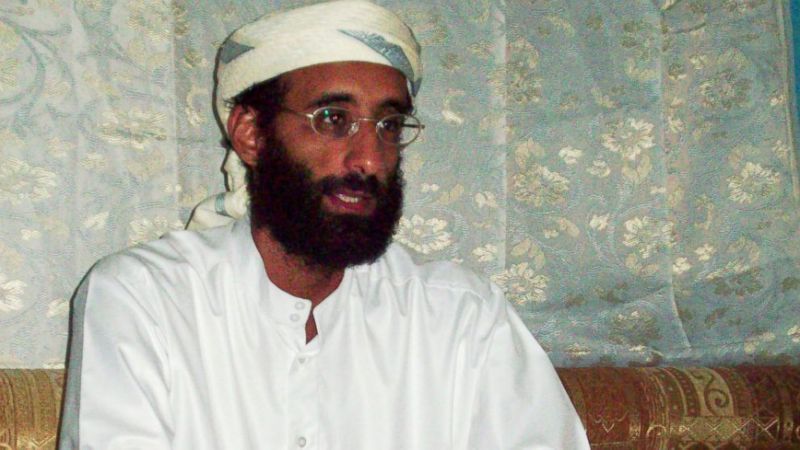
Lt. Col. Mark McCurley stood tense and quiet in the operations cell in Africa with his eyes transfixed on the large, high-definition monitor before him. It was playing a real-time video feed from a Predator drone — the same video McCurley said was being beamed to high-level officials in Washington, D.C., more than 7,000 miles away.
The drone, one of a small fleet of remotely piloted aircraft (RPA) in the air for the mission, was tailing two white pick-up trucks as they weaved their way through a small town in a remote part of Yemen. Anwar al-Awlaki, an American citizen and senior member of al Qaeda, was in the lead car with his bodyguards. The second car purportedly held more of his entourage.
“They started driving, taking a nice winding route through the village. They went through some village square where all the shopping was going on. It was all calculated, either to lose surveillance or keep them as close to as many civilians as possible so that a strike couldn’t happen,” McCurley told ABC News this week.
But al-Awlaki eventually had to leave town and the cover of collateral damage.
“Our 10-minute window came when they left town and there was a stretch of highway between that village and the next one he was going to that we had to get the strike in,” McCurley said. “Essentially, what it turned into is once he hit that long straight-away and took off, we rolled in with two Predators, you know, one for the primary shot and one for the back up in case he missed.”
McCurley, who was in command of a reconnaissance outfit in Djibouti tasked with launching and recovering drones for missions in the area, is the first involved in the drone operation that killed al-Awlaki to speak publicly about details of the strike. Earlier in the day his men had launched three of the drones involved and once the planes were safely on their way to the target zone, McCurley’s team handed over the controls to Air Force servicemen at Cannon Air Force Base in New Mexico to fly the plane and take the shots. It has been previously reported that additional drones involved in the mission took off from asecret CIA base on the Arabian Peninsula.
In his recently-published book “Hunter Killer,” McCurley, now retired, makes no mention of the purported CIA involvement, but describes the strike that killed al-Awlaki from a Predator that took off from Djibouti with the call sign “Gordon,” named for Gary Gordon, an Army Delta Force soldier killed in the Black Hawk Down incident in 1993 in Somalia. McCurley said the Department of Defense reviewed and approved his book before publication.
After the first missile was fired and on its deadly path, McCurley writes that “the Predator floated alongside al-Awlaki’s truck. Had he looked up, it would have been entirely possible that he would have seen the aircraft as the pilot eased a little rudder to pull the nose away from the target.”
“Five, four, three… The sensor relaxed his grip a mite. The cross hairs drifted toward the lead vehicle… A black streak entered the picture from above, raced downward, and slammed into the hood of the truck.”
McCurley told ABC News that after the first strike, the second truck tried to “evade, but the second missile was already in flight so they really didn’t have a chance.” Among the other alleged militants killed in the strike was Samir Khan, another American citizen and the editor of an al Qaeda magazine, though the drone team did not know Khan was in the convoy at the time, McCurley said.
After the first two Predators turned to head back to base, at least one other lingered to make sure there were no survivors. No one on the ground moved. After a few reported high-profile failures to get al-Awlaki, the mission was a success.
Throughout the operation, McCurley said the operation cell, with his drone pilots and sensor operators in Djibouti, was quiet and “sterile.”
“These guys are professionals, they don’t get excited about this,” McCurley said of his men. “I don’t think anyone does in this profession. They were very calm. They wanted to get it right… It was very by-the-book. The al-Awlaki strike, we ran it just like any other strike.”
The killing of al-Awlaki, a native of New Mexico, was and continues to be controversial, as does the whole of the drone “targeted killing” program. President Obama personally approved al-Awlaki as a legitimate target year before his death. McCurley said drones had tracked al-Awlaki’s network for more than a year before the strike.