From Garden City to Westminster: Barrier Diplomacy and Silent Messages
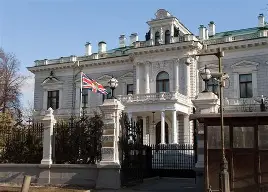
In a scene rich with symbolism, Egyptian authorities removed the concrete barriers that had long surrounded the British Embassy in the heart of Cairo, opening a new chapter in the language of silent diplomacy. The decision was not merely a regulatory measure to ease traffic in Garden City; it carried cross-continental political messages—from the banks of the Nile to the halls of Westminster.
This Egyptian move, coinciding with rising tensions between Cairo and London, reflects a shift in the rules of diplomatic engagement. Field symbols are now being used to express political positions, especially in light of what Egypt views as Britain’s failure to protect its diplomatic mission in London. While official channels remain silent, the lifted barriers speak the language of reciprocity, redrawing the boundaries of diplomatic privileges between the two nations.
Egypt’s Foreign Minister stated that “Egypt reserves the right to respond and act reciprocally,” referencing the Vienna Convention on Diplomatic Relations, citing Britain’s failure to safeguard Egyptian interests.
Public Confusion and Delayed Official Response
Despite the symbolic weight of the move, the delayed official statement from the Egyptian government sparked public anticipation and concern. Many expected a clear explanation linking the removal of the barriers to the attacks on Egypt’s embassy in London, especially amid growing calls for reciprocal action. The delay fueled speculation and gave the impression, to some, that the state was hesitant to take a firm stance on a matter tied to national sovereignty.
On social media, many voiced their desire for a decisive position that would elevate Egypt’s international standing and preserve the dignity of its citizens. Others viewed the act itself as a sufficient political message.
The Vienna Convention and Legal Framework
The 1961 Vienna Convention remains the cornerstone of diplomatic relations between states, affirming the inviolability of diplomatic premises and the host country’s obligation to ensure their protection. In this context, Egypt’s decision does not constitute a direct violation of the convention but rather falls within the scope of lawful reciprocal response.
Comparable International Cases
Russia – United States (2017): Reduction of American diplomats in response to sanctions.
Iran – United Kingdom (2011): Storming of the British Embassy in Tehran led to its temporary closure.
Saudi Arabia – Canada (2018): Expulsion of the Canadian ambassador and freezing of trade relations following human rights criticism.
These examples illustrate how diplomatic disputes can evolve into concrete actions, as reflected in Egypt’s recent decision.
Potential Implications for Bilateral Relations
Egypt’s move signals a desire to recalibrate diplomatic protocols with the UK. It is a legally grounded action under the principle of reciprocal response. However, the tension may affect security and intelligence cooperation, as well as economic and cultural ties. The crisis could prompt a review of the security privileges granted to foreign missions, potentially leading to either escalation or a more balanced relationship.
A reassessment of the security and protocol privileges granted to British missions in Egypt may follow, possibly met with similar measures from the British side.
Crisis or Opportunity?
From another perspective, this crisis could serve as an opportunity to rebuild the relationship on more equitable and respectful foundations. Effective diplomatic dialogue may lead to new understandings that strengthen the partnership rather than weaken it.
Impact on Security and Intelligence Cooperation
The tension also affects joint efforts in counterterrorism, illegal migration, and intelligence sharing. It may further impact British investments in Egypt and academic and cultural cooperation.
Ultimately, the future of this relationship hinges on both parties’ ability to manage disagreements wisely and return to the negotiating table with realism and mutual respect.
It is also important to recognize that the United Kingdom remains one of Egypt’s key trade partners, particularly in education, energy, and tourism. Political tension could cast a shadow over British investments in Egypt or disrupt academic and cultural exchange programs—unless proactive steps are taken to contain the crisis.