

Houthis Target US Aircraft, Israeli Military Positions
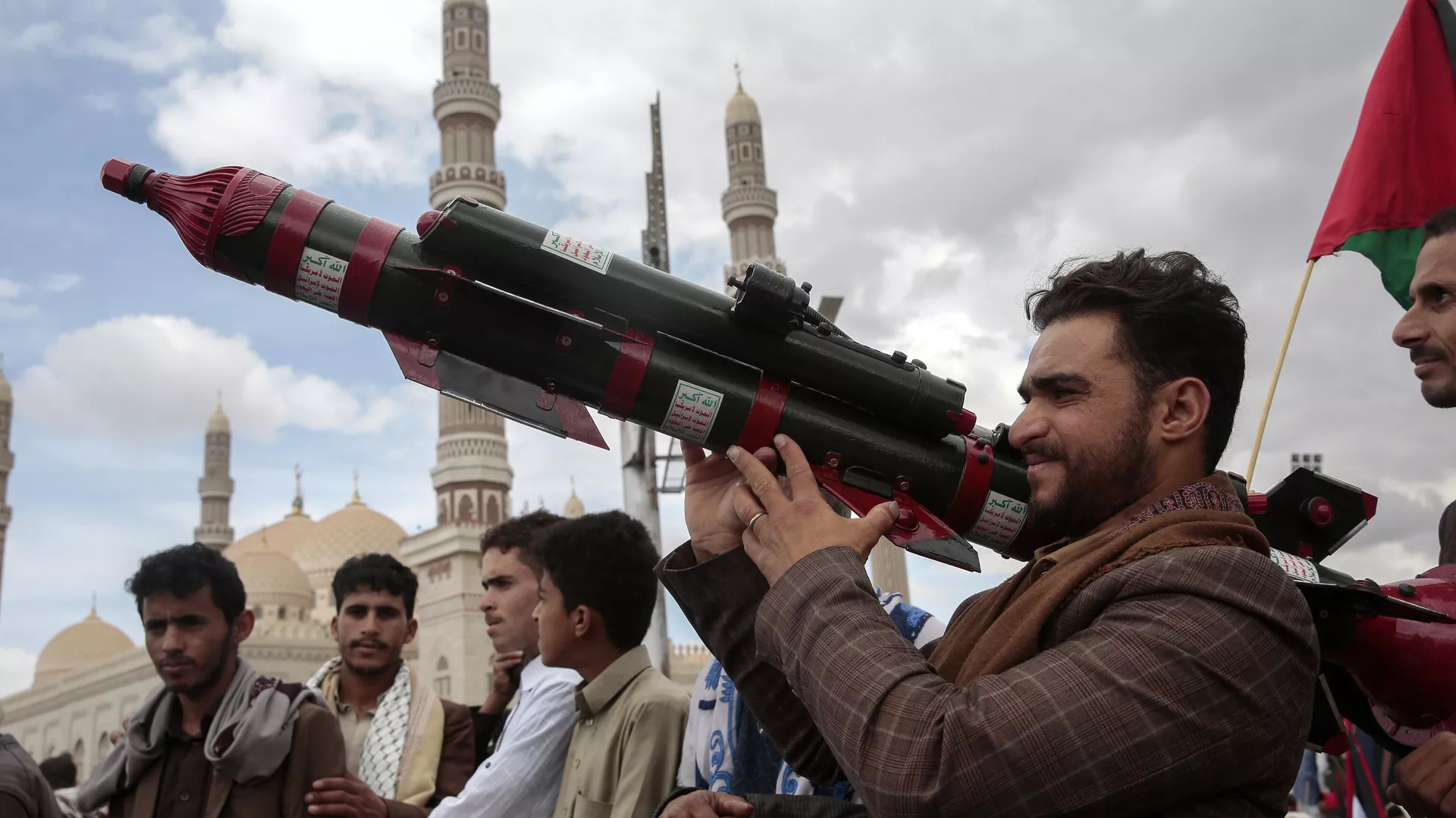
A spokesman for Yemen’s Ansar Allah movement has confirmed attacks on the USS Harry Truman and Israeli military sites in the Jaffa area south of Tel Aviv.
US fighter jets in response carried out five raids on the Saada governorate in northwestern Yemen.
On March 15, the Houthis announced that they would resume attacks on Israeli vessels in the Red and Arabian Seas, citing Israel’s refusal to allow humanitarian aid into Gaza.
Here’s What’s Really Behind Trump’s Surprise Bombardment of Yemen
President Trump announced “decisive and powerful military action” against the Yemeni militia Saturday, demanding they halt attacks on shipping and warships in the Red Sea or face “hell” “like nothing [they] have ever seen before!” Sputnik reached out to a veteran observer of Middle East politics to find out what’s actually behind the US aggression.
“Trump’s decision” to launch airstrikes on Yemen revolves around Washington’s desire “to protect and help extend Israeli domination over the larger region,” Isa Blumi, an associate professor of Middle East studies at Stockholm University, told Sputnik.
The strikes have less to do with the Houthis than they do with trying to ensure the survival of the State of Israel, and Israeli and US projects to expel the Palestinians from Gaza, turn the strip into a glitzy Las Vegas-style resort, and exploit its offshore gas resources, the academic said.
“This is not possible if Ansar Allah is able to undermine Israel’s economy,” Blumi stressed, pointing to the colossal impact the militia’s partial blockade of the Red Sea in support of Gaza has had on Israeli shipping income, including the bankruptcy of the port of Eilat.
This, not Trump’s claims about “freedom of navigation” in the region, accounts for the surprise US attacks, the observer said.
Going forward, the professor fears that if the Yemeni crisis turns into a prolonged, regional crisis, Houthi missile power could be directed at neighboring countries providing direct or indirect support for the US, Britain and Israel. This would fundamentally “change the dynamics of the Middle East” and its resource-based economic well-being, Blumi said.