

Palestinians turn to ICC after UN bid fails
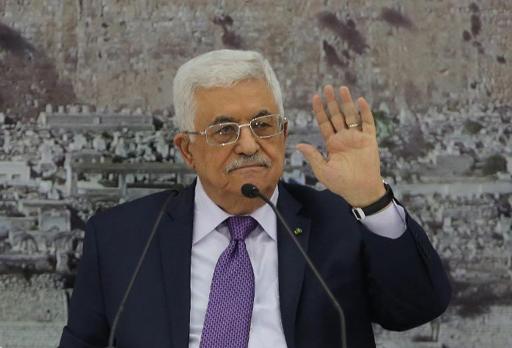
The Palestinians moved Wednesday to join the International Criminal Court as a new avenue for action against Israel after the UN Security Council rejected a resolution on ending the occupation.
The Palestinians hope that ICC membership will pave the way for war crimes prosecutions against Israeli officials for their actions in the occupied territories.
But Israel said it would be Palestinian crimes which would be exposed to the judgment of the Hague-based court.
Tuesday’s vote at the 15-member Security Council came after a three-month campaign by the Palestinians to win support for a resolution that would have set a timeframe for ending the Israeli occupation.
Israel hailed its rejection as a victory, saying the vote dealt a blow to Palestinian efforts to diplomatically “embarrass and isolate” the Jewish state.
But the Palestinians denounced the failure of the text to win the necessary nine votes to pass as “outrageously shameful”.
The resolution would have set a 12-month deadline for Israel to reach a final peace deal with the Palestinians and called for a full withdrawal of Israeli troops from the Palestinian territories by the end of 2017.
Council heavyweights China, France and Russia were among eight countries voting in favour, while the United States and Australia voted against. Five others abstained, among them Britain, but also Nigeria which had been expected to support the resolution.
The failure to win the nine “yes” votes necessary for the resolution to be adopted spared Washington from having to wield its veto, which would have caused it embarrassment with key Arab allies.
But it was also a diplomatic blow for the Palestinians who had counted on the symbolic victory of nine votes, even though the resolution would in all likelihood have been blocked by a US veto.
The missing vote was that of Nigeria which had assured the Palestinians it would support their resolution but which ended up abstaining after lobbying efforts by both Israel and Washington.
Speaking early Wednesday, Israeli Prime Minister Benjamin Netanyahu hailed Sydney and Washington for their support and extended special thanks to Nigeria and Rwanda, both of whom abstained.
“This is what tipped the scales,” he said.
Foreign Minister Avigdor Lieberman said: “The failure of the Palestinian vote at the Security Council should teach the Palestinians that provocations and attempts to force Israel into unilateral processes will not achieve anything — quite the opposite.”
But Russia expressed regret over the council’s failure to pass the resolution, describing it as “a strategic error”.
Moscow’s UN envoy Vitaly Churkin accused Washington of “monopolising” decades of Israeli-Palestinian peace talks and leading them “to a dead end.”
The Palestinians reacted furiously to the vote and pledged to immediately press ahead with an application for ICC membership.
“The UN Security Council vote is outrageously shameful,” said senior PLO official Hanan Ashrawi.
“Those countries that abstained demonstrated a lack of political will to hold Israel accountable and to act in accordance with the global rule of law and international humanitarian law,” she said referring to Britain, Lithuania, Nigeria, Rwanda and South Korea.
The Islamist Hamas movement, the de facto rulers of Gaza, blamed Abbas for the setback, demanding he now make good on threats to cut security cooperation with Israel and join the ICC.
“This was a unilateral decision taken by Abu Mazen (Abbas) who has taken the Palestinian decision-making process hostage,” spokesman Fawzi Barhum told AFP.
“He is now facing two choices after this failure… he must make good on his threats to end security cooperation with the occupier, and sign the Rome Statute,” he said, referring to the court’s founding treaty.
Senior officials said Abbas would sign the Rome Statute later on Wednesday along with 15 other international conventions.
Based in The Hague, the ICC can prosecute individuals accused of genocide, crimes against humanity and war crimes, and Palestinian plans to
Abbas was to discuss the next steps in the statehood campaign at a leadership meeting in the West Bank city of Ramallah at 1630 GMT.
Israel warned that joining the court would also expose the Palestinians themselves to prosecution.
“The Palestinians will themselves be judged by this court which will show the world the nature of Palestinian terrorism and the war crimes committed in the name of the Palestinian Authority,” foreign ministry spokesman Emmanuel Nahshon told AFP.