

Commercial Release Today in France Across 53 Cinemas
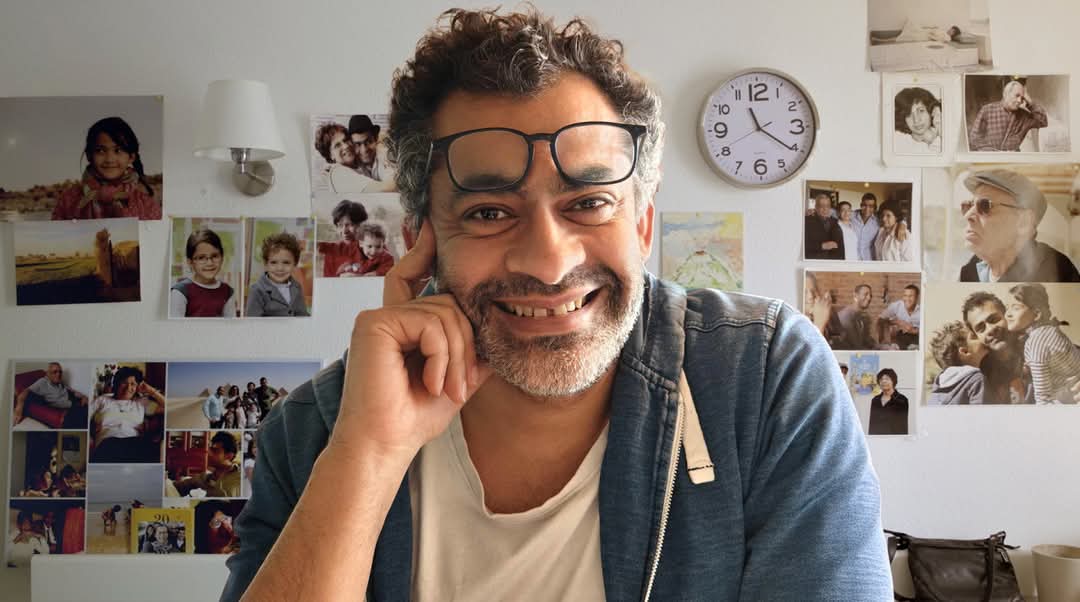
Namir Abdel Messeeh: Cinemas Are the True Test of a Film
By Ahmed Fawzy
Starting today, “Life After Siham”, the latest film by director Namir Abdel Messeeh, embarks on a new journey—this time on French cinema screens. The film is released commercially today in 53 cinemas across 50 French cities, including Paris, Lyon, Marseille, Bordeaux, Lille, Nantes, Nice, Toulouse, Montpellier, Rennes, Grenoble, Cannes, Dijon, Rouen, Versailles, Orléans, Tours, Valence, Clermont-Ferrand, and Amiens, as part of an extensive network of independent and commercial theaters.
This wide theatrical release follows the film’s successful run at numerous international film festivals. A Q&A session with the director will take place today following the screening at Les 3 Luxembourg cinema in Paris.
Speaking about the film’s public release, Abdel Messeeh said that feelings of anxiety and happiness inevitably overlap for any filmmaker when audiences watch a film and share their reactions. He noted his excitement about experiencing viewers’ responses inside theaters, adding that this sense of apprehension is an inherent part of the directing process. “A filmmaker is always asking: Will the message reach the audience? Will they connect with the film?” he explained. He emphasized that audience engagement made him feel the film’s message had truly come through, at which point the film no longer belongs solely to its creator, but becomes the audience’s as well—shaped by shared personal and human experiences.
Abdel Messeeh added that his encounters with audiences during festival screenings were emotionally charged moments, combining anticipation with vulnerability. He stressed that reactions inside cinemas represent the true test of a film. While presenting such a deeply personal and humanitarian work to the public was not easy, he considered it essential for the film to move beyond its intimate origins and become a collective experience.
He also pointed out that audience responses—whether silence, emotional reactions, or post-screening discussions—gave him a strong sense that the film had reached viewers, and that its story no longer belonged to him alone. What pleased him most, he said, was hearing audiences describe how the film resonated with their own experiences of loss and memory, transforming it into a space for connection rather than simple observation. Abdel Messeeh reaffirmed that respecting audience intelligence has always been central to his directorial choices, describing “Life After Siham” as a film that should be watched slowly and reflected upon long after the screening ends—its true value revealed in the lasting emotional impact it leaves behind.
The film unfolds after the death of Siham, as Namir struggles to come to terms with her permanent absence. In his eyes, a mother is eternal. From this belief, he embarks on a journey through his family history between Egypt and France. This personal exploration intertwines with echoes of Youssef Chahine’s cinema, telling a story filled with love—one that remains alive beyond loss.
“Life After Siham” is written and directed by Namir Abdel Messeeh and stars Siham Abdel Messeeh, Waguih Abdel Messeeh, and Nermeen Abdel Messeeh. The film features cinematography by Nicolas Duchêne, sound by Roman Dymny, editing by Benoît Alavoine and Emmanuel Manzano, and music by Clovis Schneider. It is produced by Awdia Films in partnership with Camille Lamel, Les Films d’Ici, Red Star, and Ambient Light, and distributed by Splitscreen and Météore Films.