

Fiji on the Frontline: How America’s Pacific Strategy Seeks to Squeeze China
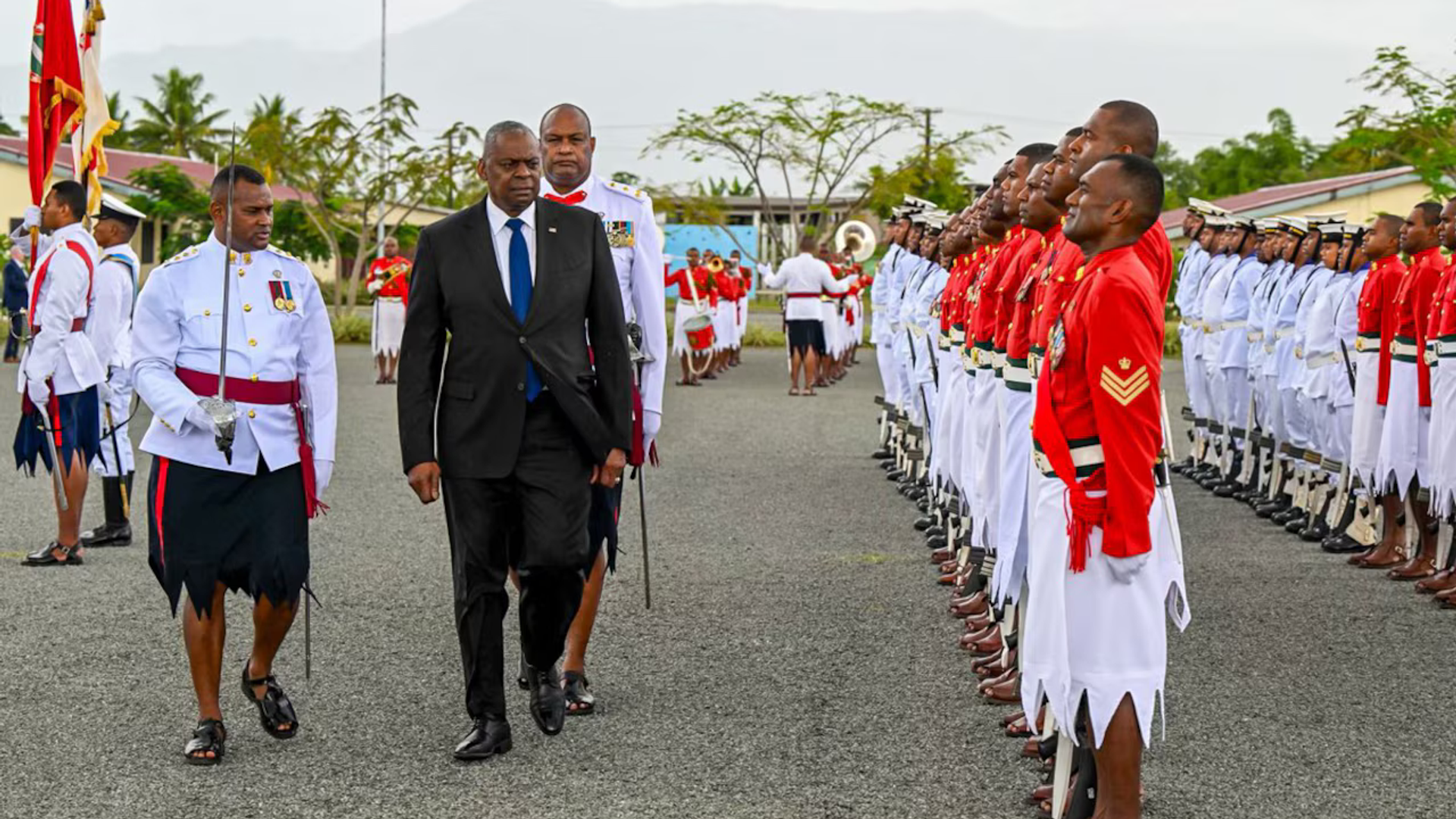
The US and Fiji are working on a new “status of forces” agreement
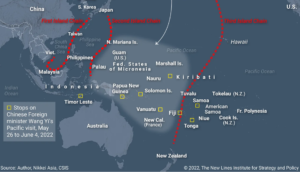
Fiji is the latest square in a strategic chessboard Washington is working to set up against China in America’s century-plus-year-old quest to dominate the Pacific, and its post-WWII “Island chain strategy,” which envisions the militarization of a network of islands in the region to stop China’s navy from freely maneuvering through the Pacific, and prevent commercial traffic from reaching the Asian nation in a crisis.
Approving a $400 million project to rebuild an airfield on Tinian Island in the Northern Mariana Islands, used in the final days of WWII to launch the bombers which dropped atomic bombs on Japan,
facilitating and overseeing a major military buildup by Taiwan, which China considers its inalienable territory, as well as Japan, South Korea, Australia, Singapore and the Philippines (including through joint drills and missile deployments),
launching a new military command with Japan and South Korea in Japan, citing the “danger” emanating from China, Russia and the DPRK,
mulling the permanent deployment of US nuclear weapons in allied Pacific nations,
planning to more than triple the budget of US Indo-Pacific Command from $3.5 bln this year to $11 bln in 2025 for infrastructure spending, naval ops, classified space programs and $1 bln for the Pentagon’s Maritime Strike program,
inviting fellow NATO countries’ warships into Pacific waters for power projection and joint training in the region,
inking a controversial defense pact with Papua New Guinea, which sparked protests last year over its secrecy,
and moving politically and diplomatically to try to sow chaos and undermine China’s political, economic and security outreach and activities in the region, up to and including attempts to institute regime change in China-friendly nations, most recently in the Solomon Islands, and hampering Beijing’s long-standing efforts to reach an agreement with regional nations to ease territorial claims-related tensions.